
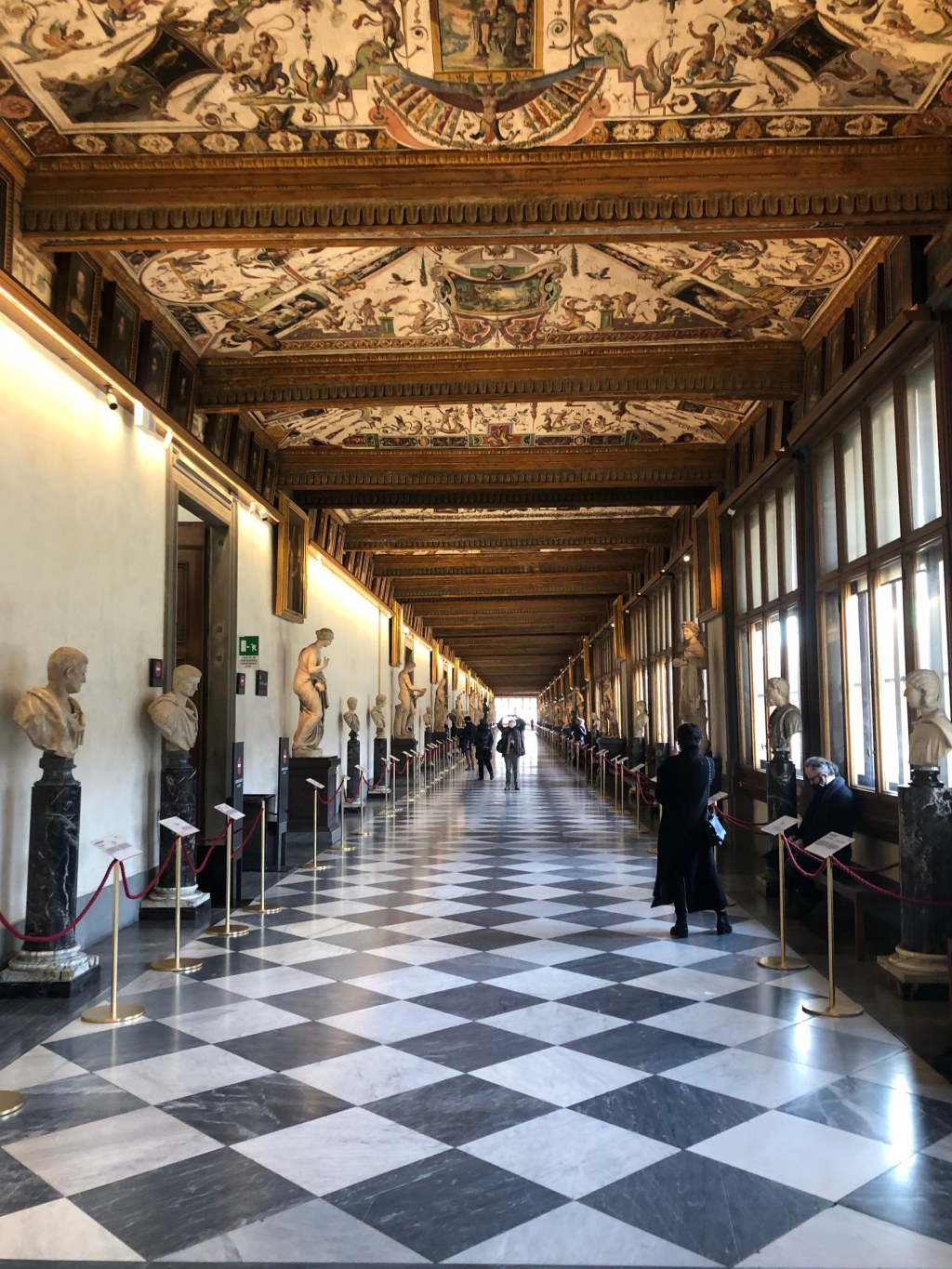
Botticelli, Leonardo, Michelangelo, Raphael, Titian, Caravaggio: the Uffizi Gallery is home to some of the most important works in the history of art.
It’s also one of the easiest museums to get wrong, between queues, overpriced resellers and hours lost in the corridors. Here you’ll find the practical information first, then how to plan your visit and, finally, a little history so you see it with fresh eyes.
At a glance
- Opening hours: Tuesday to Sunday, 8:15 am to 6:30 pm (last entry 5:30 pm). Closed on Mondays, 1 January and 25 December.
- Ticket: €25 bought on the day, €29 booked in advance.
- Afternoon ticket: €16 if you enter from 4 pm and buy it on the day (€20 booked in advance).
- Free: Under-18s of any nationality, people with a certified disability and their companion, and everyone on the first Sunday of the month.
- Reduced (€2): EU citizens aged 18 to 24.
- 5-day PassePartout (Uffizi, Palazzo Pitti and Boboli): €40.
- Official tickets: tickets.uffizi.it · call centre +39 055 0354135 (daily, 8 am–7 pm).
How to buy Uffizi tickets
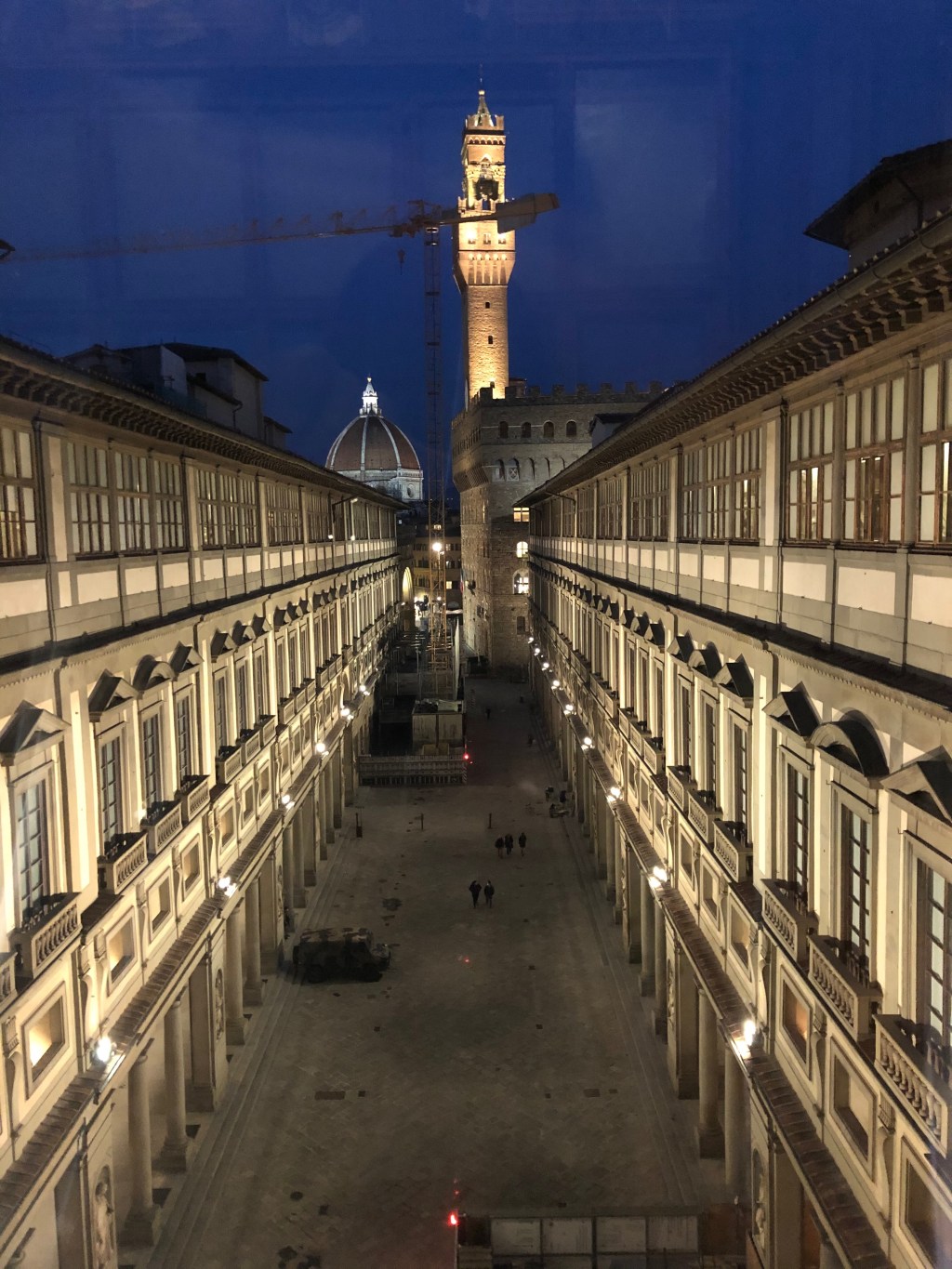
Only buy on the official website tickets.uffizi.it, by phone or at the ticket offices under the portico of the Piazzale degli Uffizi, the ones in the photo. Be wary of websites that copy the official one and sell the same ticket for much more.
⚠️ Tickets are personal: spell your name correctly and bring photo ID.
What about the Vasari Corridor?
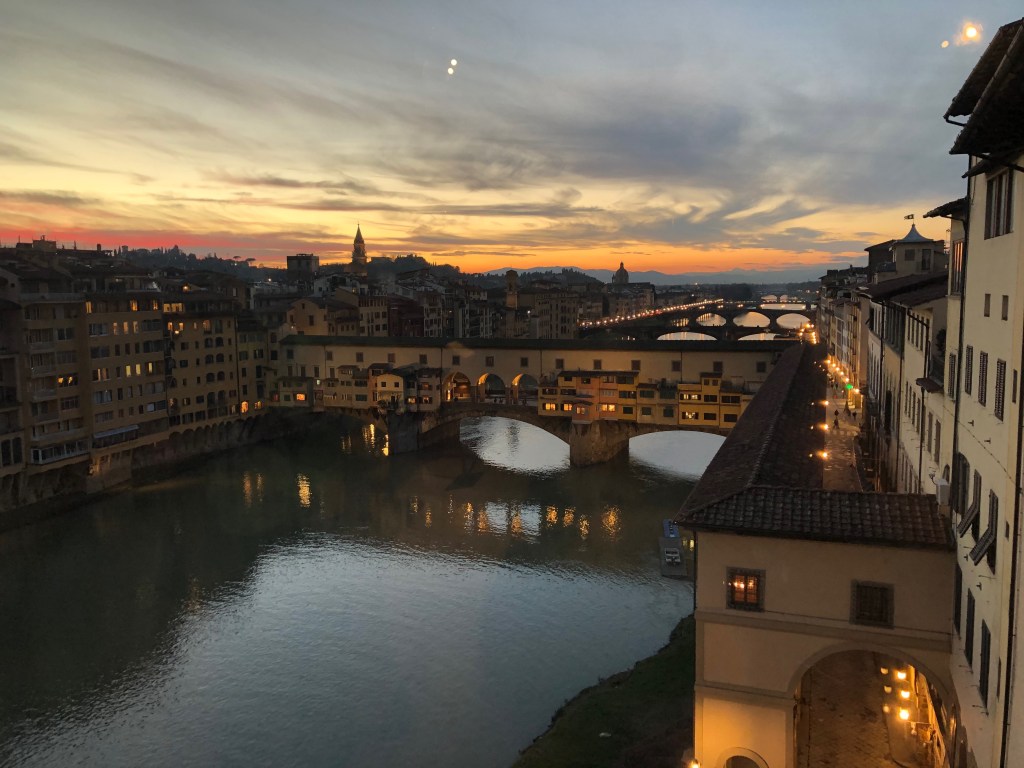
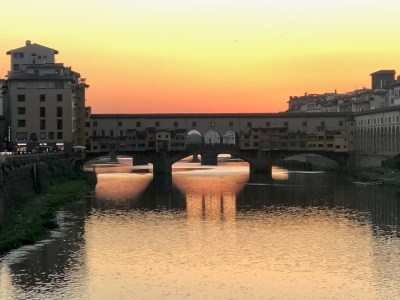
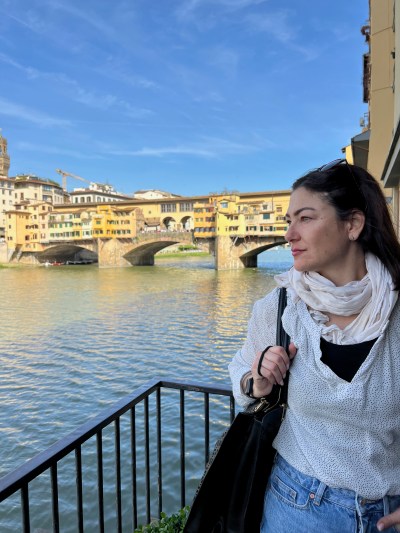
The Vasari Corridor starts at the Uffizi: the elevated passageway Giorgio Vasari built in 1565 for Cosimo I de’ Medici, in just five months, for the wedding of his son Francesco to Joanna of Austria. It crosses the Arno over the Ponte Vecchio and leads to Palazzo Pitti, so the duke could go from the seat of government to his residence without setting foot in the street.
Today you can visit it with the combined Uffizi + Corridor ticket (€43 on the day, €47 in advance), always by reservation. You’ll find everything in my Vasari Corridor guide.
Free entry on the first Sunday of the month?
Yes: on the first Sunday of every month entry is free for everyone, as part of the Domenica al Museo scheme. On that day you can’t book or buy in advance: free tickets are handed out at the entrance on a first-come, first-served basis, so expect long queues.
The exception is restricted-access areas, such as the Vasari Corridor mentioned above: there, booking is still compulsory on free Sundays too.
Cheaper in the afternoon
Since January 2026, if you go in from 4 pm onwards the ticket costs €16 when bought on the day (€20 in advance). That gives you about two and a half hours before closing at 6:30 pm: enough for a first visit, if you know where to go.
How to plan your visit
You can’t see the whole Uffizi in one morning, and you don’t need to: people who try to see everything leave exhausted and remember almost nothing. It’s better to choose. If it’s your first time, head straight for the highlights; if you’re interested in a particular period or artist, spend your time in those rooms.
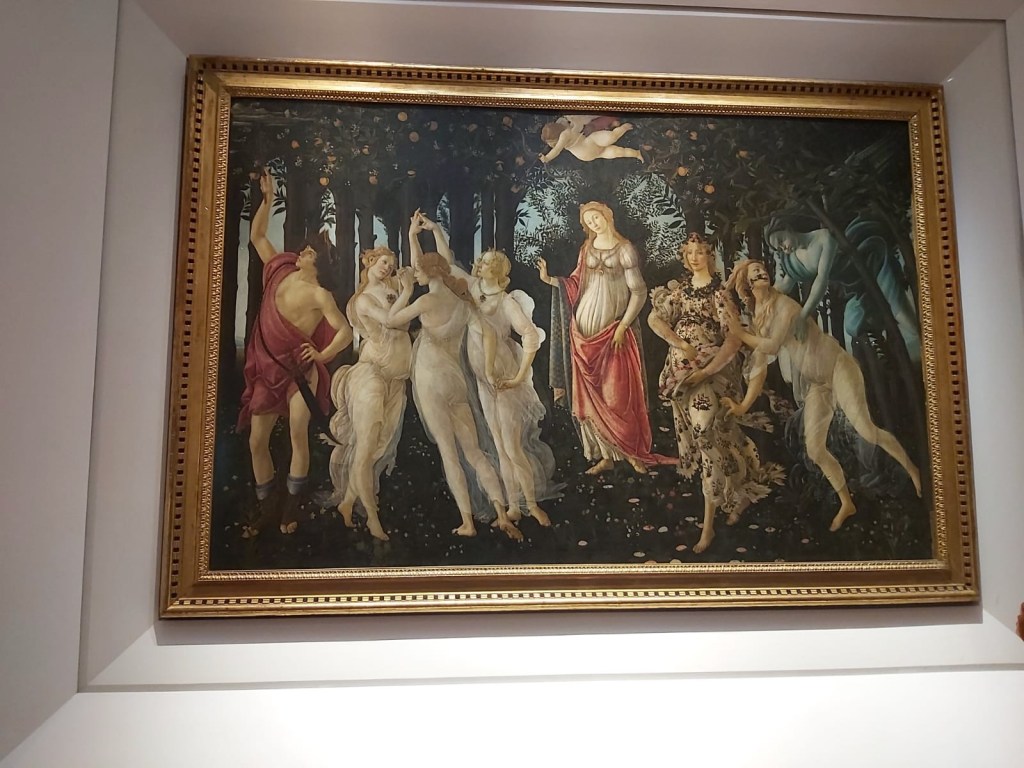
The route starts at the top, on the second floor: from the gold backgrounds of Cimabue and Giotto to Botticelli, ending with Leonardo, Michelangelo and Raphael. That’s where many people think the visit is over, but there’s still the first floor, with the rest of the 16th century and the 17th: the Mannerism of Pontormo, Rosso Fiorentino and Bronzino, Titian and his Venus of Urbino, Caravaggio, Artemisia Gentileschi and the Carracci.
That’s why a guided tour makes such a difference: you follow a thread, room by room, without wasting time or energy.
Before you go in
- Free, compulsory cloakroom for umbrellas, large backpacks and bags.
- Allow at least 2 hours, more if you add the Vasari Corridor.
- Look out of the windows: from the corridors you can see Palazzo Vecchio and the Ponte Vecchio, some of the best views in the city.
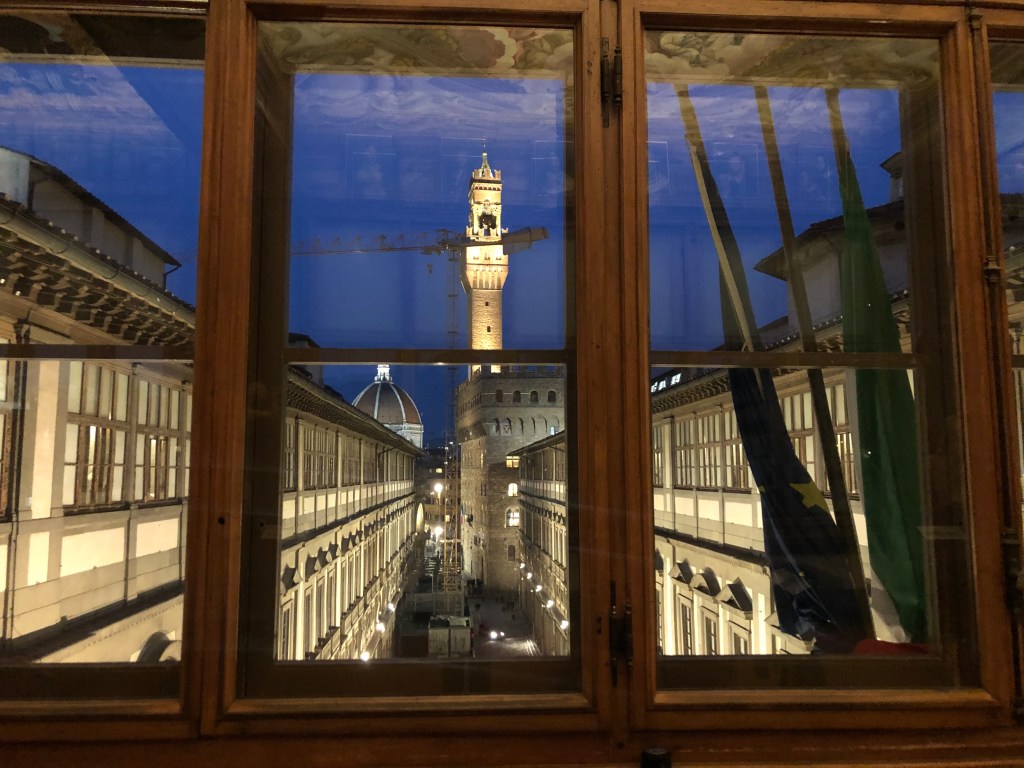
Uffizi means «offices»: the story of the building
The name says it all: the uffizi were offices. In 1560 Cosimo I de’ Medici commissioned Giorgio Vasari to build a large complex next to Palazzo Vecchio to house the magistracies of the new Medici state. It was a statement of power: the administration of Florence, orderly and on display, along a street-like square opening towards the Arno.
It was his son, Francesco I, who turned the top floor into a gallery for the family collections, with Buontalenti’s famous octagonal Tribune. From then on, generation after generation, the Medici kept filling the Uffizi with paintings, ancient sculpture and precious objects.
💡 Guide’s note: if you can see all these works in Florence today, it’s thanks to a woman, Anna Maria Luisa de’ Medici, the last of the dynasty. In 1737 she signed an agreement with the new rulers of Tuscany: the family collections could never leave Florence and had to remain open to the public. One of the first heritage-protection laws in history.
Visit the Uffizi with a licensed guide
The Uffizi is huge. With a guide you go straight to what matters and understand why these works changed the history of art.
Practical information updated in November 2026 from the official Uffizi Galleries website. Prices and opening hours may change: always check them at uffizi.it.
📖 Keep reading
★★★★★ 5.0 on Tripadvisor
over 100 reviews
Have you already taken a tour with me? A review takes a minute and really helps other travellers find me. Thank you!
Follow me on social media
@lugaresdeflorencia · Florence, unfiltered




Debe estar conectado para enviar un comentario.