
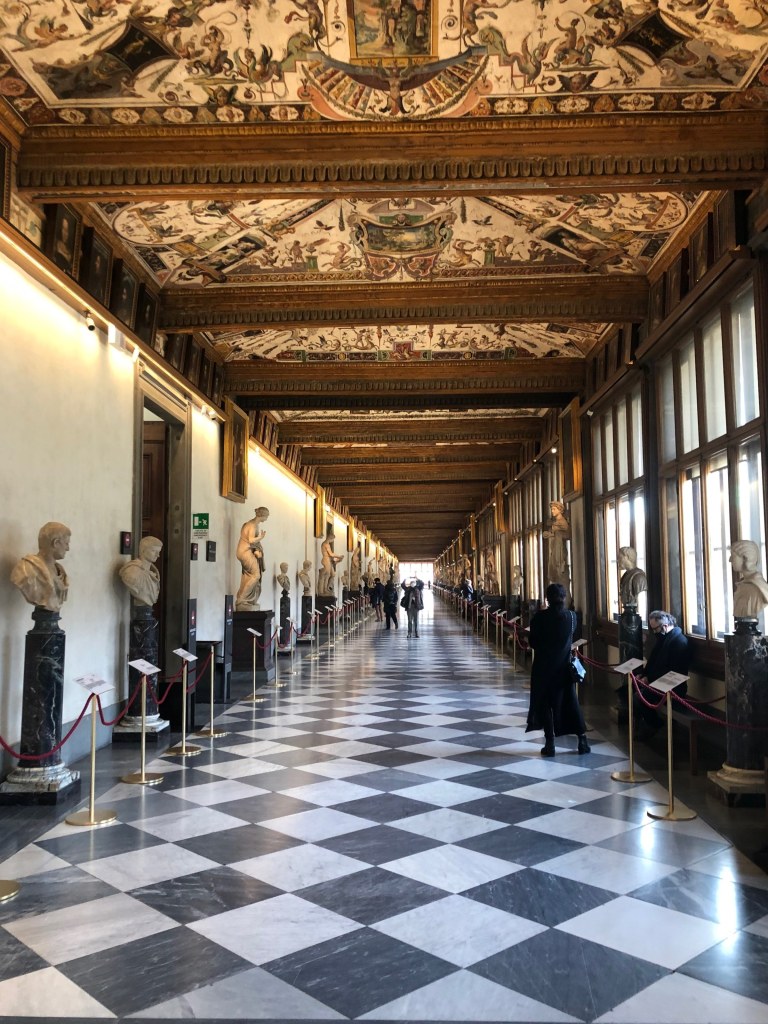
The Uffizi is huge, and most visitors leave tired, feeling they have seen everything and understood almost nothing. A guided tour does the opposite: it picks a thread and follows it room by room, from the gold of the Gothic Maestà altarpieces to Botticelli’s Venus.
On this private tour in English we trace the origins of the Renaissance through its key works, and the story of the building that houses them.
The tour
- Duration: 2 h.
- Headsets: Included.
- Tickets: Not included. I’ll help you book them on the official website.
- Booking: At least 72 hours in advance.
- Closed: Mondays.
What we’ll see
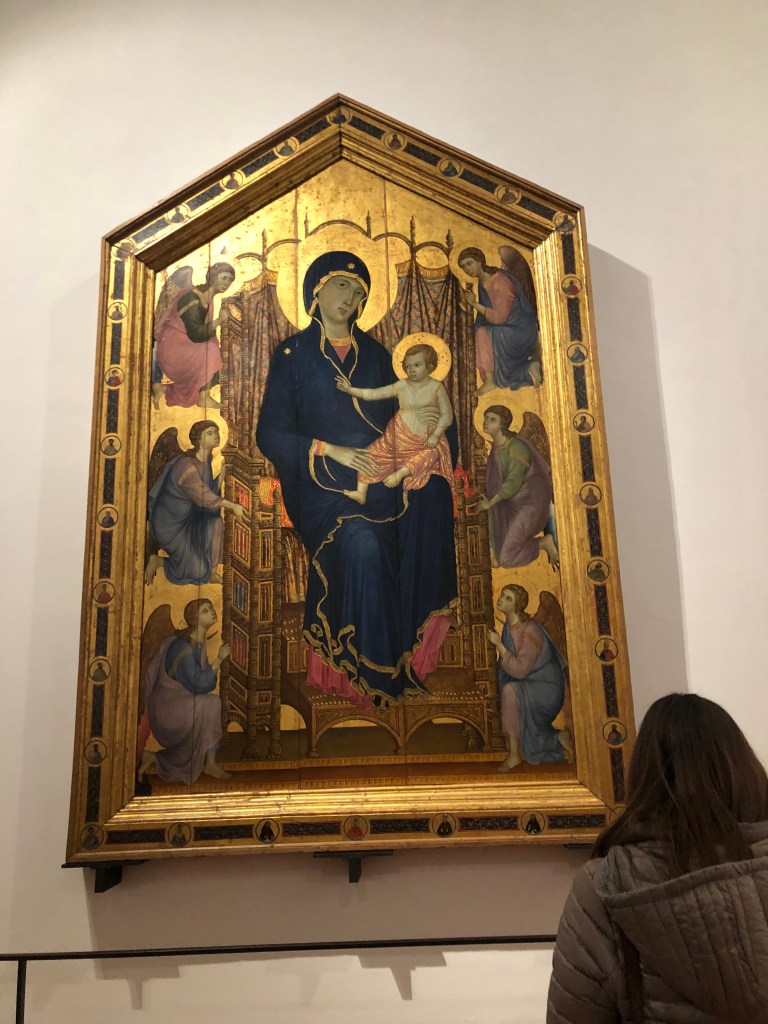
The three Maestà
In the same room, Cimabue, Duccio and Giotto paint the same subject: the enthroned Virgin. Seeing them side by side is enough to watch flat Byzantine gold turn into volume, weight and space. This is where the road to the Renaissance begins.
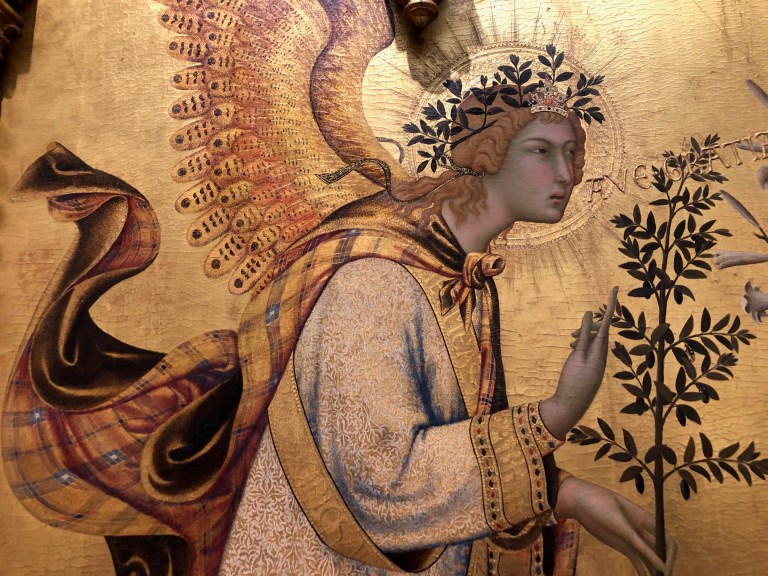
Simone Martini’s Annunciation
Painted in 1333 for Siena Cathedral, with Lippo Memmi. The angel’s words come out of his mouth engraved in the gold, and the Virgin recoils almost in fear. The most elegant Gothic: the other face of Giotto.
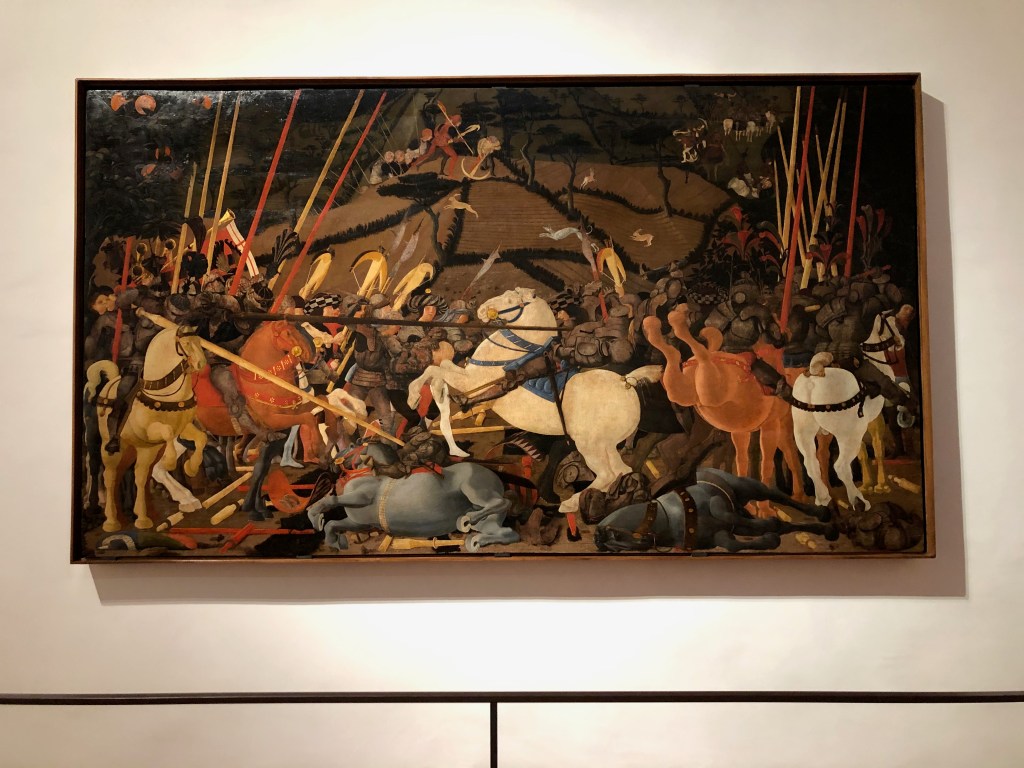
The Battle of San Romano
Paolo Uccello and his obsession with perspective: broken lances lined up on the ground, horses like geometric toys. It is one of three panels that hung in the palace of Lorenzo the Magnificent; the other two are now in London and Paris.
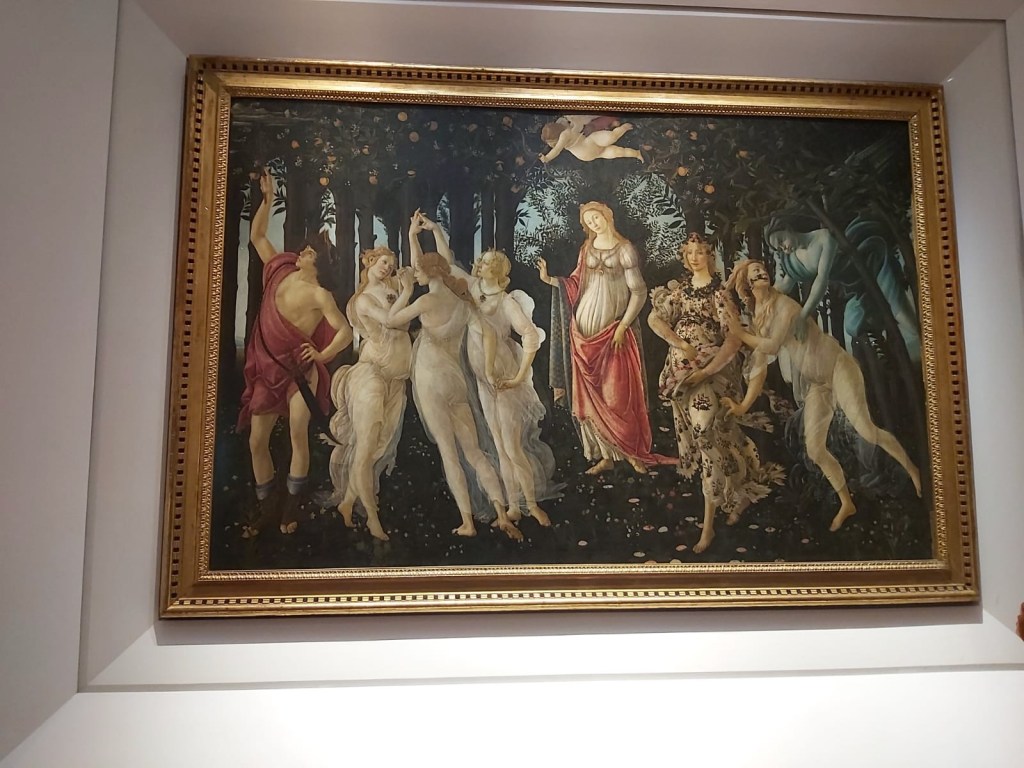
Botticelli
Primavera and The Birth of Venus, painted for the Medici family: ancient mythology read through the eyes of Lorenzo’s Neoplatonic philosophers. And, in the same room, the Calumny, the restless work of Savonarola’s years.
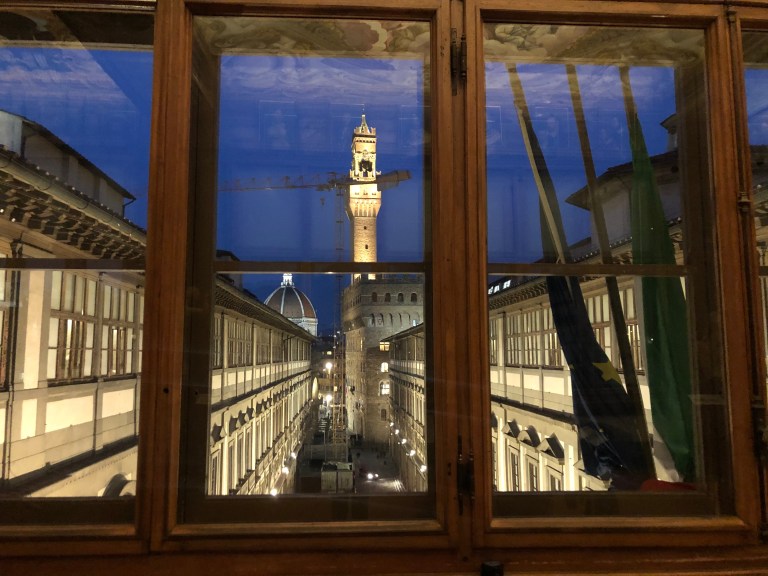
Vasari’s palace, from administration to art
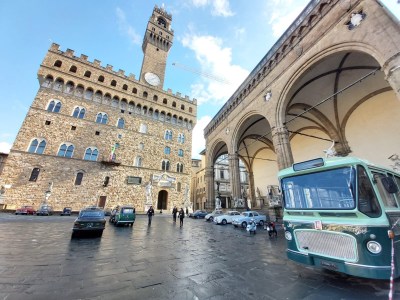
The name comes from the uffizi, the state magistracies: in 1560 Cosimo I commissioned Vasari to build, next to Palazzo Vecchio, a building that would bring together the offices of the new Medici government. His son Francesco I turned the top floor into a gallery for the family collections, with Buontalenti’s octagonal Tribune: one of the first museums in Europe was born.
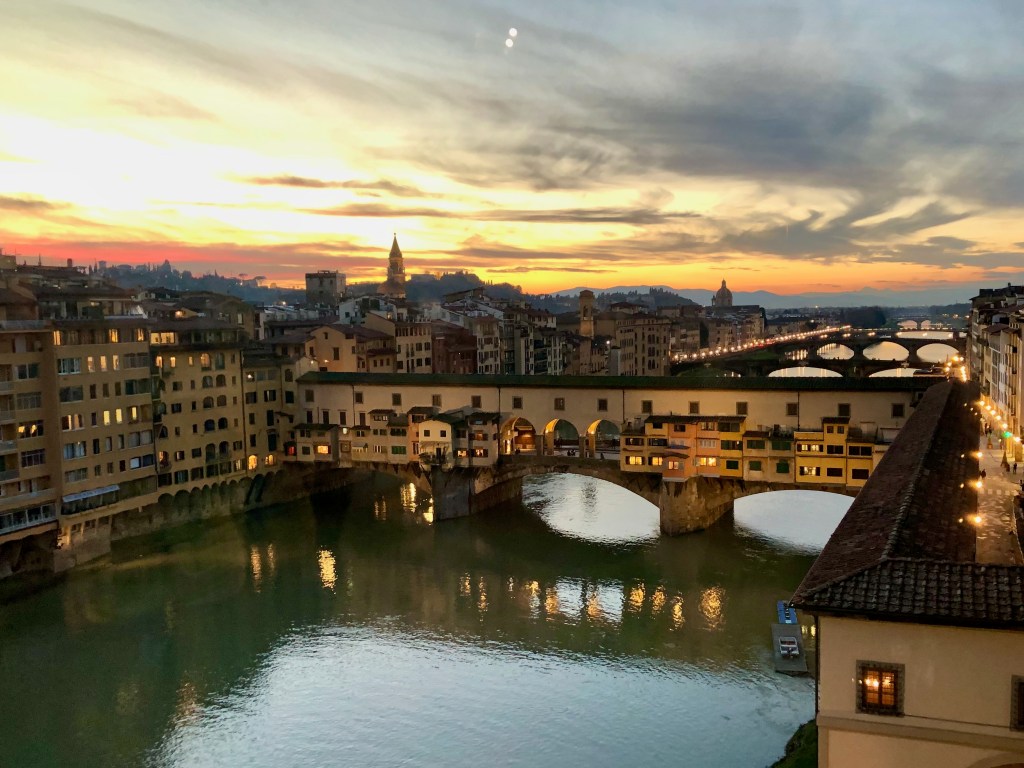
The window on the Arno
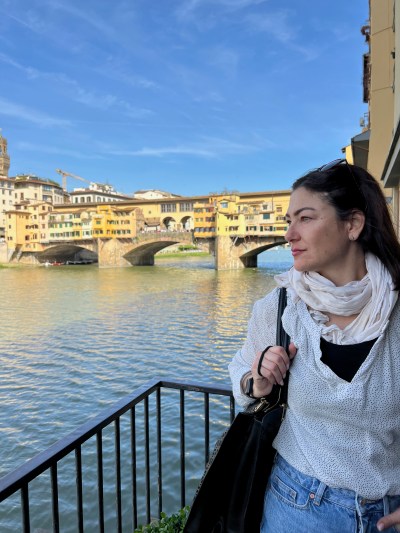
Between one corridor and the next, the museum looks out over the river: the Ponte Vecchio, with the Vasari Corridor running above it to Palazzo Pitti. At sunset it is one of the most beautiful views in the city, and it’s included in your ticket.
💡 Thanks to a woman
If these works are still in Florence, it is thanks to Anna Maria Luisa de’ Medici, the last of the dynasty. In 1737 she signed the «Family Pact» with the new rulers of Tuscany: the collections could never leave the city and had to remain available to the public. One of the first heritage-protection laws in history.
Ask for a quote
Send me the date, the number of people and whether you already have tickets. I’ll reply with a proposal and a price.
What people always ask me
How many works do we see in two hours?
Not many, and on purpose: about fifteen key works, well explained, in chronological order. After the tour your ticket is still valid and you can stay in the rooms you liked most.
How do I buy tickets?
Only on the official website or at the ticket office, never from resellers. If you book the tour with me, I’ll help you choose the time slot.
Can we add the Vasari Corridor?
Yes, with its own ticket and during its opening hours. When you contact me, I’ll suggest options and dates.
Photos: Chiara Reale.
★★★★★ 5.0 on Tripadvisor
over 100 reviews
Have you already taken a tour with me? A review takes a minute and really helps other travellers find me. Thank you!
Follow me on social media
@lugaresdeflorencia · Florence, unfiltered


Debe estar conectado para enviar un comentario.