
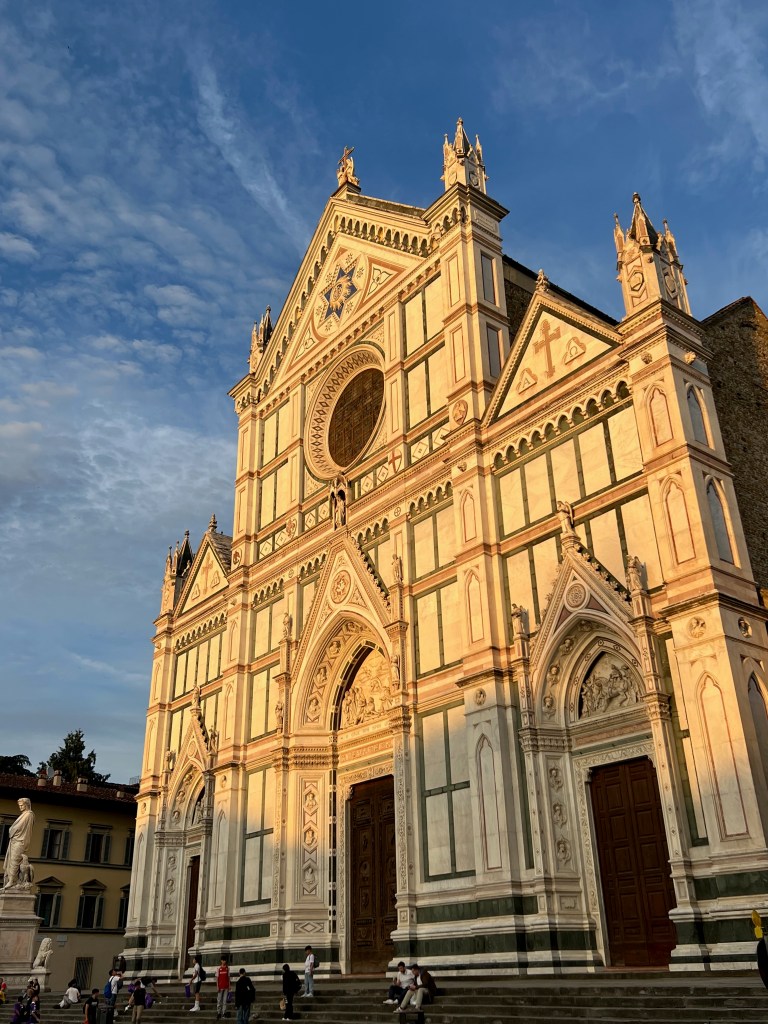
In Florence, churches weren’t just places of worship: they were the shop windows of the great families. The Bardi, the Rucellai, the Medici and the Nerli paid the finest artists of their day to decorate chapels, gaining prestige in life and securing their memory after death.
These five basilicas take you through the city’s story from the Romanesque to the Renaissance: three charge admission and two are free. Tap the links for opening hours and tickets.
At a glance
- Paid entry: Santa Croce (€10), Santa Maria Novella (€7.50) and San Lorenzo (€9; the Medici Chapels are a separate ticket).
- Free entry: Santo Spirito (the sacristy with Michelangelo’s Crucifix, €2) and San Miniato.
- Opening hours: Free churches have short, changeable hours: some open only in the morning or only in the afternoon. Check before you go.
- San Miniato: The monks sing Vespers in Gregorian chant, but the time varies by day and season. Check the official website.
- Dress code: These are working churches, so dress modestly. No visits during Mass.
1. Santa Croce, the Pantheon of Italy
The great Franciscan church, begun in 1294–1295. The poet Ugo Foscolo hailed it as the temple of Italy’s glories: here are the funerary monuments of Michelangelo, Galileo, Machiavelli and Rossini, and the cenotaph of Dante, whose remains are still in Ravenna. Don’t miss the Bardi and Peruzzi chapels frescoed by Giotto, Donatello’s Annunciation carved in pietra serena and, in the cloister, Brunelleschi’s Pazzi Chapel.
💡 Outside, on the façade of Palazzo dell’Antella, a marble disc from 1565 marks the halfway line of the pitch for calcio storico, the historic football still played in the square.
🕐 Mon–Sat 9:30 am–5:30 pm, Sun 12:30–5:45 pm
🎟️ €10 · official website
2. Santa Maria Novella, the Dominican church
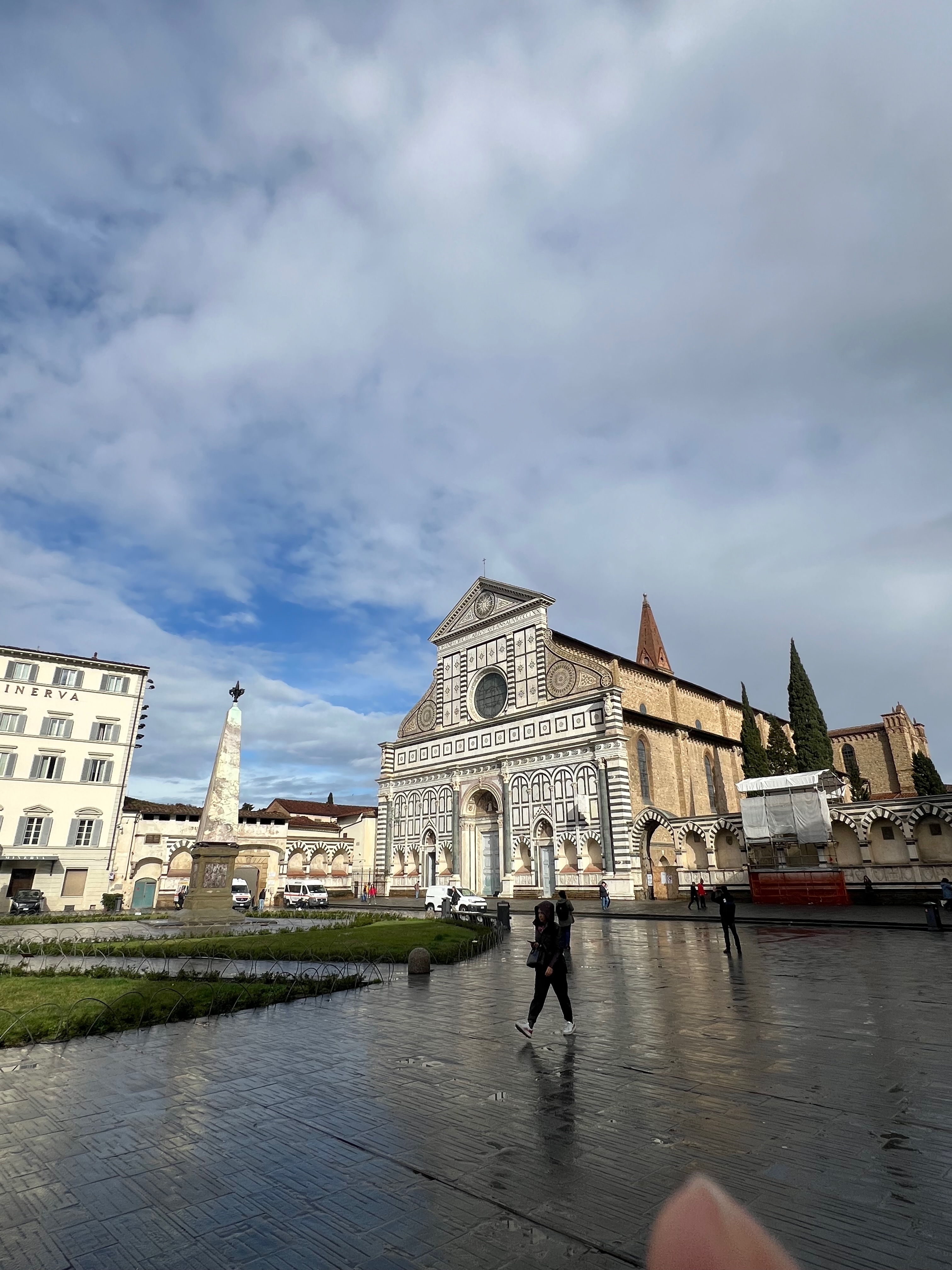
Begun in 1279 by the Dominican friars. The façade was completed by Leon Battista Alberti for Giovanni Rucellai, who left his name in the frieze and, over and over, the billowing sail of his emblem. Inside: Masaccio’s Holy Trinity, the Renaissance’s first great lesson in perspective, hidden for centuries behind an altar by Vasari; Giotto’s Crucifix, suspended over the nave; and the Tornabuoni Chapel, where Ghirlandaio portrayed the wealthy Florence of his day.
🕐 Mon–Thu 9 am–5:30 pm, Fri 11 am–5:30 pm, Sat 9 am–5 pm, Sun 1–5 pm
🎟️ €7.50 · official website
3. San Lorenzo, the Medici church
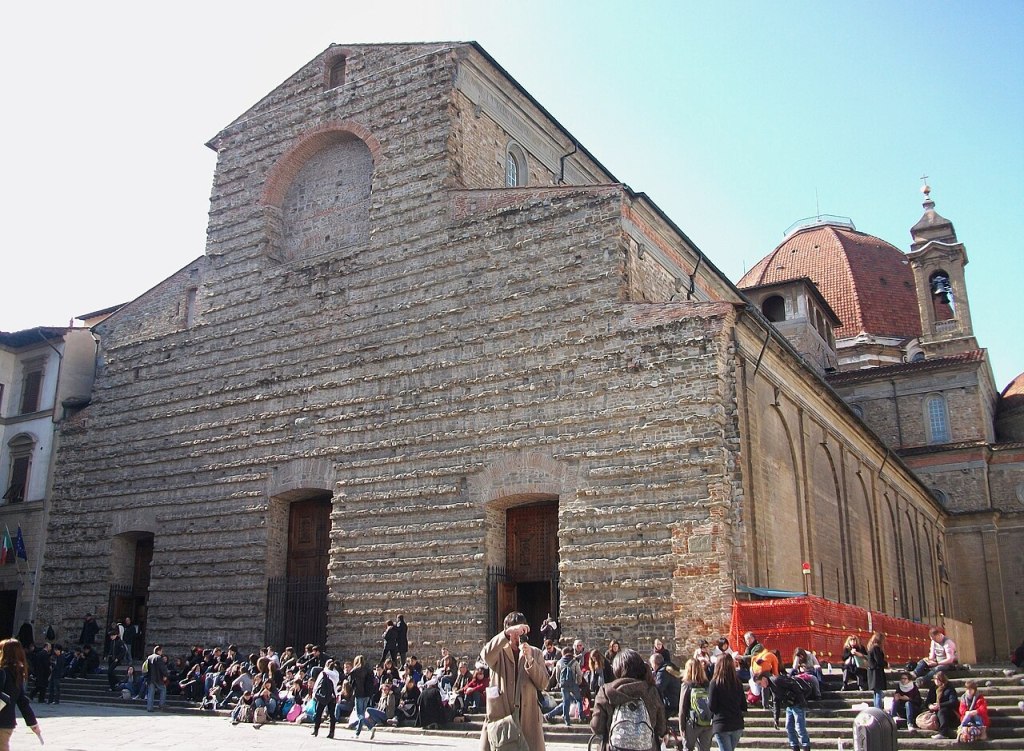
This was the Medici’s parish church and one of the oldest in the city, rebuilt by Brunelleschi in the heart of the 15th century. Outside, the unfinished brick façade; inside, the calm rhythm of the columns and the Old Sacristy, Brunelleschi’s work, with the tomb of Giovanni di Bicci, founder of the dynasty. From the cloister you enter the Laurentian Library, with the staircase designed by Michelangelo.
💡 The Medici Chapels, with Michelangelo’s sculptures, belong to the same complex but have their own entrance and ticket office round the back, on Piazza Madonna degli Aldobrandini.
🕐 Check the official website
🎟️ €9 · official website
4. Santo Spirito, Brunelleschi’s forest of columns
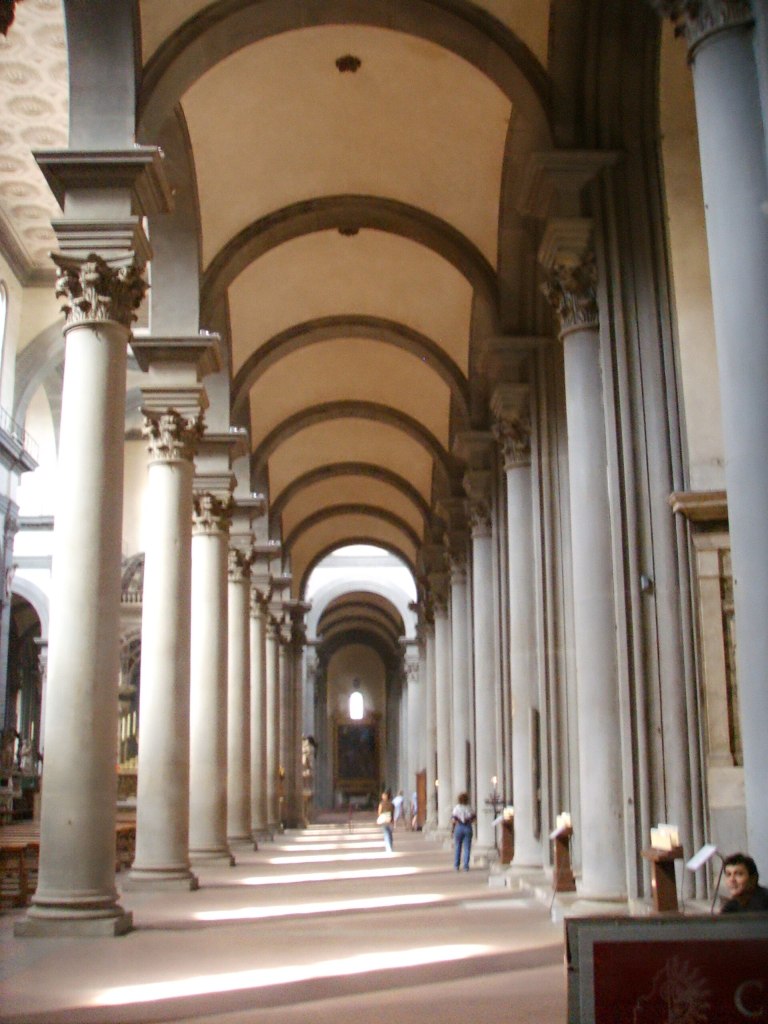
Behind a plain, almost humble façade lies the purest church of the Renaissance. Brunelleschi presented the design in 1434 and died shortly after work began; his successors finished it, toning down his boldest ideas. Everything springs from a single module, the square you can see in the floor, doubled in the nave and divided into the 40 side chapels: as you walk in, it feels like a forest of columns. In the Nerli Chapel, Filippino Lippi painted the Porta San Frediano behind his Madonna, along with the patron, Tanai Nerli, saying goodbye to his family as he left to serve as ambassador to the King of France in 1494.
💡 The sacristy holds Michelangelo’s wooden Crucifix, carved when he was about 18 for the prior who let him study anatomy on corpses from the convent hospital. And on your way out, walk round the church to Via de’ Coverelli: through a crack in the plaster you can see the curved base of a chapel, proof that Brunelleschi wanted the chapels to show on the outside too.
🕐 Mon, Tue and Thu–Sat 10 am–1 pm and 3–6 pm, Sun 11:30 am–1:30 pm and 3–6 pm, closed Wednesdays
🎟️ Church free · sacristy, cloister and refectory €2 · 📍 Piazza Santo Spirito
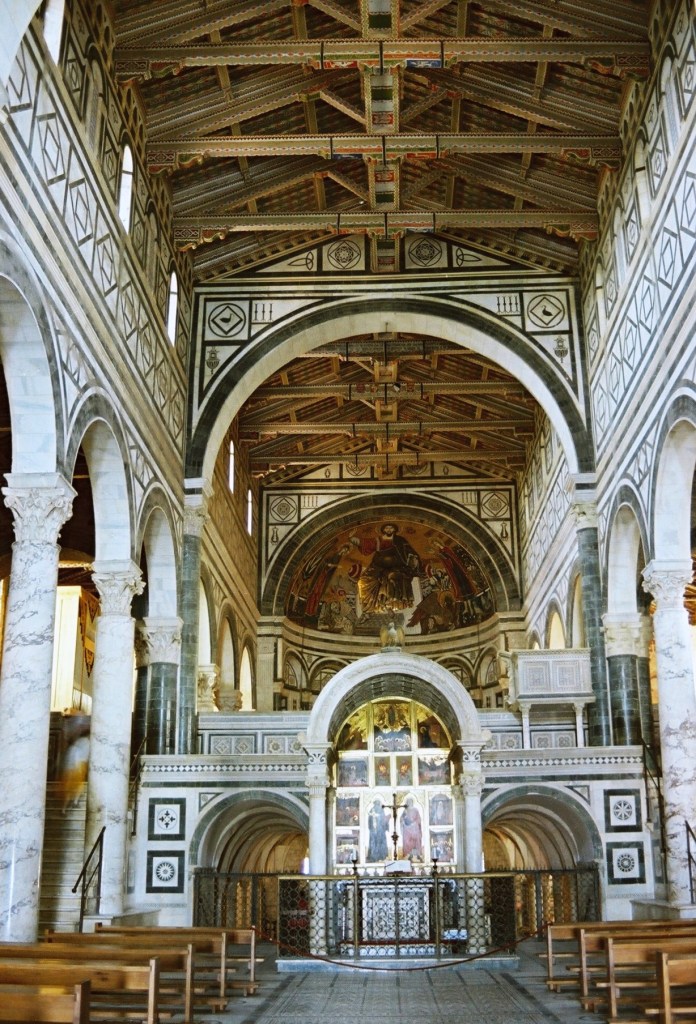
5. San Miniato al Monte, Romanesque above the city
Miniato was Florence’s first martyr: legend has it that, beheaded around AD 250, he picked up his own head and carried it up the hill where he lived as a hermit. The present basilica was begun in 1013 and is a masterpiece of Florentine Romanesque, in white and green marble inside and out; at the top of the façade is the copper eagle of the Arte di Calimala, the guild that looked after it. Inside: the 1207 floor with its zodiac wheel, the apse mosaic of 1297, Michelozzo’s tabernacle paid for by the Medici and the Chapel of the Cardinal of Portugal, a 15th-century jewel by Luca della Robbia, Rossellino and Baldovinetti.
💡 Go up late in the afternoon: the monks sing Vespers in Gregorian chant (times vary, check the official website) and, as you leave, you get the best view of Florence without the Piazzale Michelangelo crowds.
🕐 Mon–Sat approx. 9:30 am–1 pm and 3–7 pm, Sun 8:15 am–1 pm and 3–7 pm
🎟️ Free · 📍 Via delle Porte Sante 34
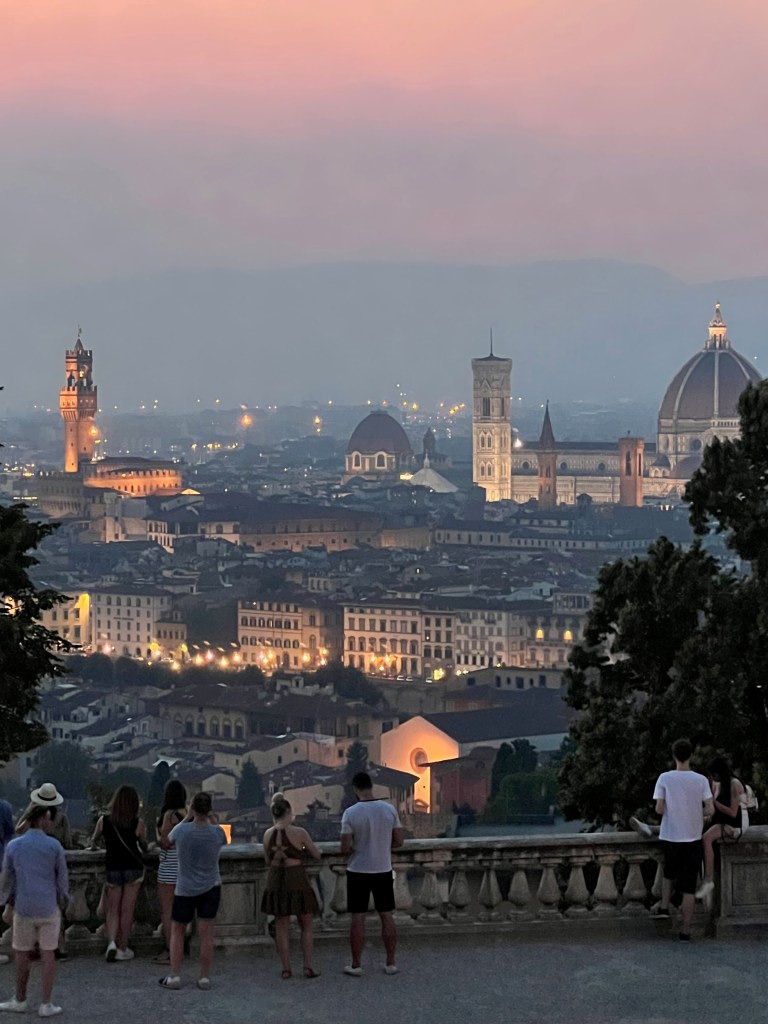
How do I combine them?
Santa Maria Novella and San Lorenzo are a few minutes’ walk apart, with Santa Croce on the other side of the centre. Santo Spirito is in the Oltrarno, and San Miniato deserves a sunset of its own.
💡 Two orders, two churches, one city
Santa Croce and Santa Maria Novella sit at opposite ends of the medieval city, and that’s no coincidence. The two mendicant orders were competing for the faithful in a Florence of merchants and craftsmen who no longer understood Latin: they needed huge churches, wide squares for preaching in the vernacular and painting that spoke plainly. That rivalry gave us Cimabue and Giotto, and with them the end of Byzantine art in Italy. Santo Spirito, the third great mendicant church, belonging to the Augustinians, grew up in the Oltrarno on the same logic, and Petrarch and Boccaccio were regulars in its library.
Want to really understand them?
With a guide, a chapel stops being «old frescoes» and becomes a story of families, rivalries and artists.
What people always ask me
How long do I need for each church?
For Santa Croce, Santa Maria Novella and San Lorenzo allow at least an hour, because the ticket includes cloisters, chapels and museum. Santo Spirito, with the sacristy, takes about 40 minutes. San Miniato needs 45 minutes inside, plus the walk up: about 20 minutes uphill from the Ponte Vecchio.
Which day of the week is best?
Santo Spirito is closed on Wednesdays; on Sundays Santa Croce opens at 12:30 pm and Santa Maria Novella at 1 pm, and on Fridays the latter opens at 11 am. Monday to Saturday mornings, ideally midweek, you’ll find them all open and less crowded.
Is there Gregorian chant at San Miniato?
The monks sing Vespers in Gregorian chant, but not always at the same time: it differs between weekdays and Sundays and by season. Check the times on the official website or on the noticeboard at the entrance. It’s a service, not a concert: go in quietly and don’t use flash.
Do I need to buy tickets in advance?
It isn’t compulsory: at Santa Croce, Santa Maria Novella and San Lorenzo you buy them at the ticket office by the entrance. Mind the time: last entry is before closing.
📖 Keep reading
Information checked in November 2026. Opening hours and prices may change: check before you go. Photos: Chiara Reale, except Joanbanjo/Wikimedia CC BY-SA 3.0 (San Lorenzo), Sailko/Wikimedia CC BY 2.5 (Santo Spirito) and Kucharek/Wikimedia, public domain (San Miniato).
★★★★★ 5.0 on Tripadvisor
over 100 reviews
Have you already taken a tour with me? A review takes a minute and really helps other travellers find me. Thank you!
Follow me on social media
@lugaresdeflorencia · Florence, unfiltered


Debe estar conectado para enviar un comentario.